
6 Strategies for Managing Concentrated Stock
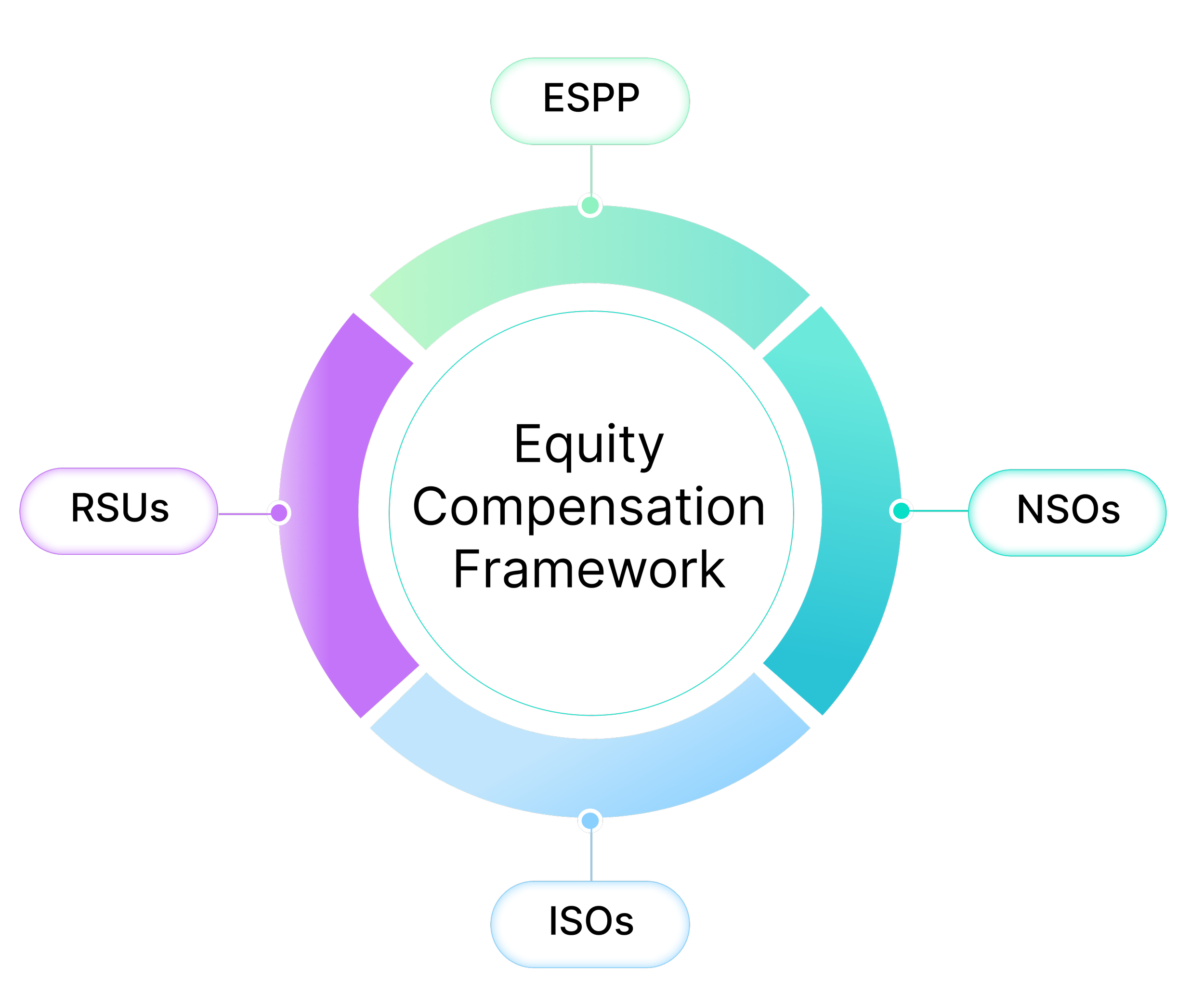
Equity compensation can be one of the most effective ways to build wealth. But over time, it often leads to a concentrated position in a single stock, sometimes without you ever making a deliberate decision to concentrate.
The challenge isn't just whether to sell. It's about reducing concentration in a way that balances risk, taxes, liquidity needs, and long-term goals. In most cases, the right answer isn't a single decision but a coordinated strategy over time.
In this post, we dive into six concentrated stock strategies worth understanding. The most effective plans use several strategies at the same time.
1. Systematic Selling Plans
A systematic selling plan involves committing in advance to sell a fixed percentage or dollar amount of shares at each vesting event. Instead of evaluating each vest independently, you define the rule once and apply it consistently.
What this solves: It removes the influence of recent price movements, avoids the tendency to "wait for a better price," and reduces decision fatigue. Most poor equity decisions aren't analytical errors; they're behavioral. A systematic plan turns a series of emotional decisions into a pre-planned repeatable process.
Example: An employee sells 60% of each vest and holds 40%. Over time, this reduces concentration while maintaining exposure to potential upside. The key is consistency. Adjustments should be made deliberately, not in reaction to short-term market moves.
2. Pre-Scheduled Trading Plans (10b5-1)
A 10b5-1 plan is a formal arrangement that allows you to sell shares on a predetermined schedule. It must be established during an open trading window, when you are not in possession of material non-public information.
What this solves: For employees with frequent blackout periods, the ability to sell shares consistently is often constrained. A 10b5-1 plan effectively expands the window for diversification while removing the need to make real-time decisions. It also provides a legal safe harbor against insider trading liability, since the sale decisions are made in advance.
Why it works well with systematic selling: A 10b5-1 plan can automate a systematic sell program that allows your predetermined sell percentage to execute regardless of blackout periods, market conditions, or emotional state.
3. Tax Exchange Funds
A tax exchange fund is a private investment partnership that allows you to contribute appreciated shares in exchange for a diversified interest in a pool of assets contributed by other investors. The contribution is structured as a tax-free exchange, meaning you defer the capital gains tax that would otherwise be owed.
After a mandatory holding period, typically seven years under IRS rules, you can withdraw a diversified basket of stocks rather than your original concentrated position.
What this solves: Large unrealized gains that make an outright sale prohibitively expensive from a tax perspective. Rather than paying combined federal, state, and net investment income taxes that can reach 47% or more (37% federal, up to 12.3% for California, plus 3.8% in net investment income tax) on decades of appreciation, the tax is deferred indefinitely.
Tradeoffs to consider: Exchange funds are typically available only to accredited investors and qualified purchasers, and minimum contributions often start at $1 million or more. The seven-year lockup is a real constraint. You cannot access the value of your contributed shares during that period. The diversified basket you receive at exit is not guaranteed to match a specific index, and fund quality varies considerably across providers.
Example: An employee contributes 50,000 shares with a cost basis of $5.00 and a current price of $80.00, representing $3.75M in unrealized gains and a potential tax bill exceeding $1M at California rates. By contributing to an exchange fund, they defer that tax entirely, receive a diversified portfolio interest, and eliminate single-stock concentration
4. Covered Call Strategies
A covered call involves selling someone else the right to purchase your shares at a specified price (the strike price) by a specified date, in exchange for receiving a cash premium upfront. You continue to own the shares and collect the premium regardless of whether the option is exercised.
What this solves: Covered calls don't reduce concentration directly; they monetize it. The premium provides incremental income and a modest buffer against a price decline. For employees who want to maintain their position while generating additional cash flow, covered calls can complement a broader equity strategy.
How to think about it: The income can be meaningful, particularly when implied volatility is elevated. But you remain exposed to the underlying stock, and you cap your upside at the strike price. This makes covered calls a complementary strategy, not a substitute for diversification.
5. Direct Indexing and Tax-Loss Harvesting
Direct indexing involves holding the individual securities that make up a broad-market index rather than buying an index fund, and using that granular ownership to strategically harvest tax losses. When individual positions within the portfolio decline, those losses can be realized and used to offset capital gains elsewhere, including gains from selling concentrated stock.
What this solves: The high tax cost of diversification. Instead of absorbing the full tax impact of a large sale in a single year, you create a system that generates offsetting losses over time. This is particularly effective when paired with a systematic selling plan.
When it makes sense: Direct indexing is most effective for employees with taxable accounts of $250k or more. Below that threshold, the tax savings typically don't justify the added complexity and management fees relative to a standard index fund.
6. Donor-Advised Funds
A donor-advised fund (DAF) allows you to contribute appreciated shares directly to a charitable account. You receive a tax deduction for the full fair market value and avoid paying capital gains tax on the appreciation entirely.
What this solves: When you sell appreciated shares and donate cash, you create a tax liability. Donating the shares directly avoids that liability entirely. For individuals with charitable intent, this is often one of the highest-leverage strategies available. It allows you to reduce concentration, lower taxes, and support causes you care about in a single transaction.
Timing matters. Contributions work best when made before a sale. Once you've sold shares and recognized the gain, the opportunity to avoid capital gains tax through a DAF contribution is gone. Building DAF contributions into your annual equity plan produces significantly better outcomes than treating them as an afterthought.
How These Strategies Fit Together
The 6 strategies highlighted are not mutually exclusive. In practice, the most effective approach is often a combination: a systematic selling plan to reduce exposure over time, implemented through a 10b5-1 plan where needed, with proceeds invested in a diversified, tax-efficient portfolio, supplemented by DAF contributions or tax-loss harvesting to manage tax impact.
The right combination depends on the size and cost basis of your position, your tax situation, your liquidity needs, and your time horizon and goals.
A note on complexity: Each of these strategies involves legal, tax, and investment considerations that interact with each other and with your broader financial picture. None should be implemented in isolation. We recommend working with a financial planner and tax advisor to model the after-tax impact of each approach before deciding on a path forward.
The Bottom Line
Concentration risk rarely appears all at once. It builds gradually through a series of reasonable decisions that, over time, create a single large exposure.
Managing that risk isn't about predicting the stock. It's about reducing dependency on a single outcome, improving after-tax results, and aligning your equity with your broader financial plan. This is where concentrated stock strategies come into play, structured approaches designed to systematically reduce risk while preserving as much value and flexibility as possible. The most effective strategies are designed in advance and executed consistently over time.
If you're navigating a concentrated position and want help building a coordinated plan, we work through exactly this kind of analysis with clients. We’re here to help evaluate your options and design a tax-aware diversification strategy.
DISCLOSURES
DiversiFi Capital Inc is a registered investment adviser located in CA and may only transact business or render personalized investment advice in those states and international jurisdictions where we are registered, notice filed, or where we qualify for an exemption or exclusion from registration requirements. Any communications with prospective clients residing in jurisdictions where DiversiFi Capital Inc is not registered or licensed shall be limited so as not to trigger registration or licensing requirements.
Past performance is not indicative of future returns, and investing always carries inherent risks, including the potential loss of principal capital. Any investment strategies are specific to individual clients and may not be representative of the experiences of all clients.
The Information presented in our blog posts is intended for educational purposes only. It is not intended to make an offer or solicitation for the sale or purchase of any specific securities, investments, or investment strategies. Unless otherwise stated, the investments discussed in our blog posts are not guaranteed.
The content in our blog posts is designed to provide information and insights but should not be used as the sole basis for making financial decisions. The content provided in our blog post(s) is provided “as is,” and/or “as available.” DiversiFi Capital Inc will to the best of its abilities maintain the content to be up to date. However, DiversiFi Capital Inc does not represent or warrant that our content or our services found within are accurate, complete, reliable, current, or error-free.
We strongly encourage readers to conduct their own research, seek advice from qualified financial professionals, and consider their unique financial circumstances before making any investment or financial decisions. Your individual situation may vary, and it's essential to make informed choices that align with your specific goals and needs. Be sure to first consult with a qualified financial adviser and/or tax professional before implementing any strategy discussed herein.
Tax information given is provided as a general strategy and not intended as tax advice. You should consult your tax professional for clarification and any additional questions prior to implementation.