
4 Reasons Investing Matters More Than Investments
When people think about building wealth, the conversation usually centers on investments such as what stocks to buy, how to allocate a portfolio, and whether to lean toward growth, value, or international markets.
This framing treats wealth as if it were simply a collection of assets. If the right investments are selected, the job is done.
A different way to think about this is to step back and look at the system behind those assets.
Wealth is not just what you own. It is the process that allows you to save, allocate capital, and keep that capital invested over time.
When you view wealth this way, the focus shifts. The system that feeds and maintains investments often matters more than the individual investments themselves.
In this post, we break down why the system behind investing, how you save, allocate, and stay invested, matters more than the investments themselves.
1. Investing Is a Process, Not a One-Time Decision
Investing rarely happens all at once. It is typically gradual and ongoing.
For most households, the process looks like this:
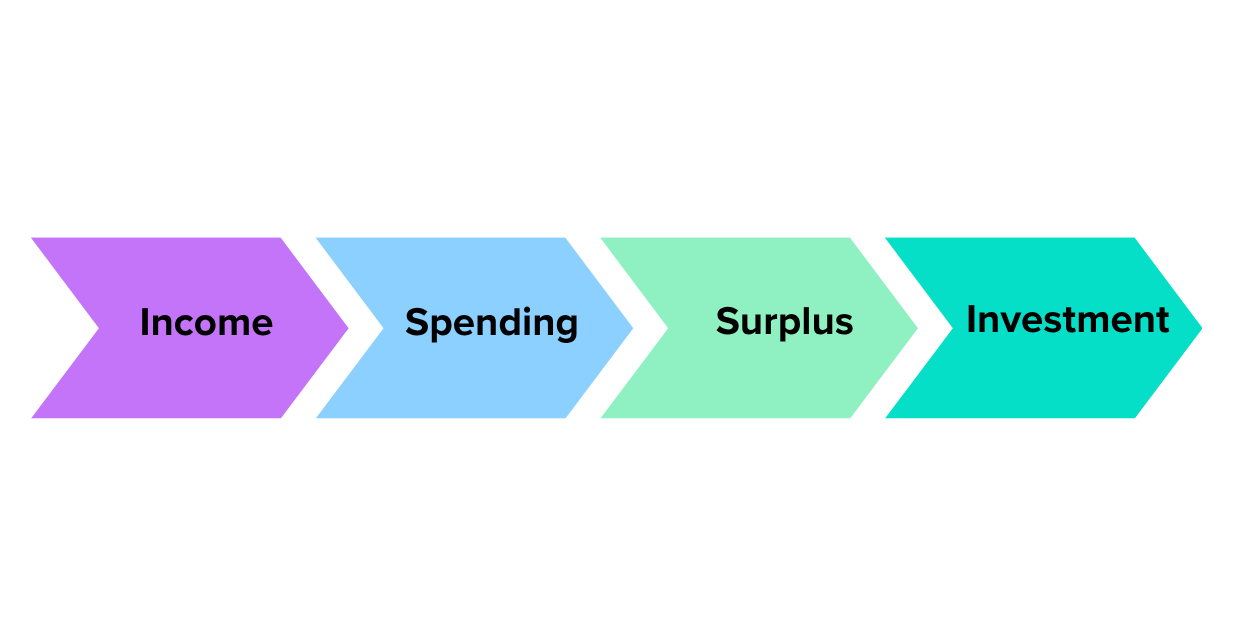
The final step is where progress is made or lost.
In practice, this step is often inconsistent. People tend to prioritize present needs over future ones. This shows up in small but meaningful ways. Surplus income gets spent instead of invested. Contributions are delayed. Investing becomes irregular.
From the outside, this may not seem like a major issue. The focus remains on choosing the right portfolio.
But over time, consistency in investing often has a larger impact than the specific investments chosen. Long-term outcomes are usually built through repeated actions, not one-time decisions.
2. Small Return Differences Can Distract From Bigger Drivers
Investors often spend a great deal of time fine-tuning portfolios.

This can include:
Small adjustments in allocation.
Minor tilts between asset classes.
Debates over expected returns.
These decisions can feel important, but their long-term impact is uncertain.
At the same time, something more fundamental is often overlooked. The amount of capital being invested.
It is natural to focus on percentages. A slightly higher return feels meaningful. But results depend on both return and the amount invested.
A portfolio earning a slightly lower return on a much larger base of capital can produce a better outcome than a higher return on a smaller base. In behavioral finance, denominator neglect refers to the tendency to focus on results while ignoring the size of the capital base that produced them.
From a systems perspective, this becomes clearer. The scale and consistency of capital flowing into investments play a major role in long-term results.
3. Behavior Shapes Outcomes More Than Strategy
Even well-constructed portfolios depend on behavior.

Markets move. Volatility is normal. Short-term losses are part of the investing experience.
When investors check their portfolios frequently, those normal fluctuations can feel more significant than they are.
This can lead to reactions that interrupt long-term progress, like:
Selling during downturns.
Changing strategies after short periods of underperformance.
Moving in and out of investments based on recent results.
These actions often have a larger impact than the underlying investments themselves.
What looks like an investment issue is often a process issue. The system guiding decisions does not support staying invested through normal market cycles.
4. The System Drives the Outcome
When people think about building wealth, the conversation usually centers on investments, including what stocks to buy, how to allocate a portfolio, and whether to lean toward growth, value, or international markets.
These are important considerations, but they are outputs of a broader system.
The system includes how consistently you save, how you allocate capital, and how you respond to market conditions over time.
When that system is steady and repeatable, it supports long-term compounding. When it is inconsistent or reactive, even strong investments may not deliver their full potential.
5 Key Takeaways
Wealth is built through a system, not just a set of investments
Consistent investing over time often matters more than one-time decisions
The amount of capital invested can be as important as the return earned
Investor behavior plays a major role in long-term outcomes
A stable, repeatable process helps support compounding over decades
Wrapping Up
Focusing only on investments can lead to overemphasizing details that may not drive long-term results.
A more useful approach is to look at the system behind those investments. How capital is generated, how consistently it is invested, and how decisions are made during periods of uncertainty.
Over time, this system is what shapes outcomes. Investments matter, but the process that supports them is often what determines whether they succeed.
DISCLOSURES
DiversiFi Capital LLC is a registered investment adviser located in CA and may only transact business or render personalized investment advice in those states and international jurisdictions where we are registered, notice filed, or where we qualify for an exemption or exclusion from registration requirements. Any communications with prospective clients residing in jurisdictions where DiversiFi Capital LLC is not registered or licensed shall be limited so as not to trigger registration or licensing requirements.
Past performance is not indicative of future returns, and investing always carries inherent risks, including the potential loss of principal capital. Any investment strategies are specific to individual clients and may not be representative of the experiences of all clients.
The Information presented in our blog posts is intended for educational purposes only. It is not intended to make an offer or solicitation for the sale or purchase of any specific securities, investments, or investment strategies. Unless otherwise stated, the investments discussed in our blog posts are not guaranteed.
The content in our blog posts is designed to provide information and insights but should not be used as the sole basis for making financial decisions. The content provided in our blog post(s) is provided “as is,” and/or “as available.” Diversifi Capital LLC will to the best of its abilities maintain the content to be up to date. However, Diversifi Capital LLC does not represent or warrant that our content or our services found within are accurate, complete, reliable, current, or error-free.
We strongly encourage readers to conduct their own research, seek advice from qualified financial professionals, and consider their unique financial circumstances before making any investment or financial decisions. Your individual situation may vary, and it's essential to make informed choices that align with your specific goals and needs.