
Money Moves: Moving to Puerto Rico
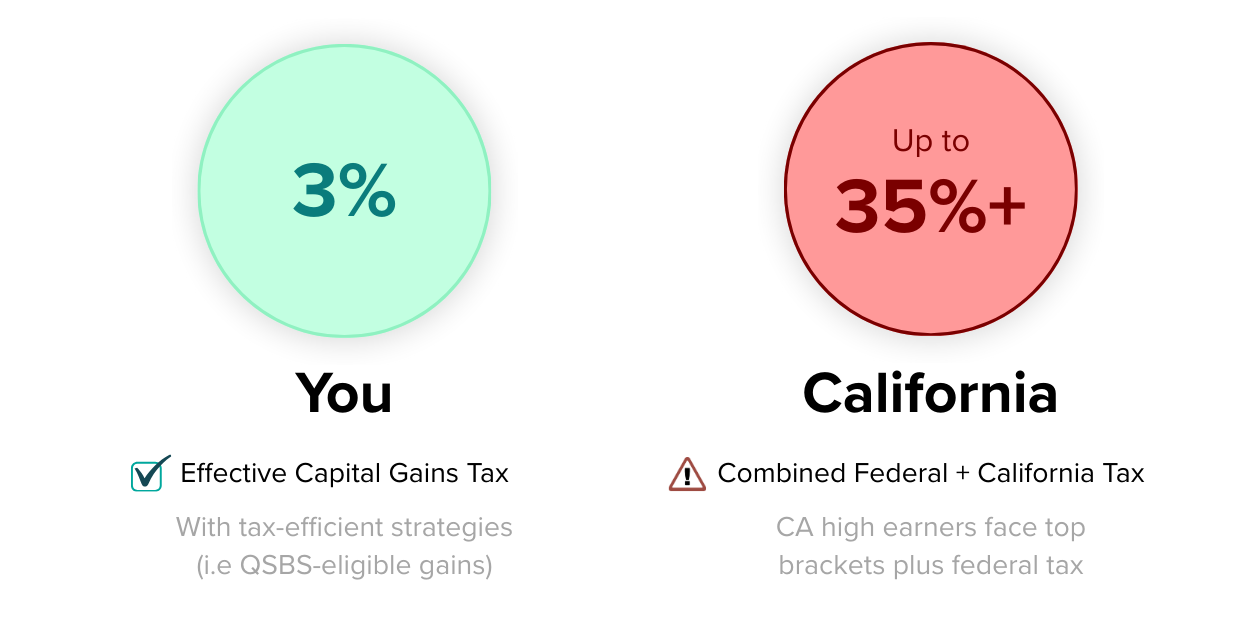
Imagine paying just 3% on capital gains while neighbors in California pay up to 35%. For some high-net-worth individuals, this isn’t a fantasy; it’s reality when they move to Puerto Rico. Beyond the lifestyle benefits, Puerto Rico offers unique tax incentives that can significantly reduce your income and capital gains tax obligations.
For tech professionals, founders, and executives with equity-heavy portfolios, understanding advanced financial strategies like moving to Puerto Rico can transform your wealth planning strategy.
In this post, we break down how Puerto Rico’s tax incentives work, who may benefit most, and the key financial and lifestyle considerations before making the move.

The Strategy: Puerto Rico’s Act 60 Tax Incentives
Puerto Rico’s Act 60 (formerly Acts 20 and 22) provides powerful tax benefits to new residents:
Income Tax Benefits: Certain types of passive income may be taxed at 0–4% rather than the U.S. federal rate.
Capital Gains: Gains accrued after becoming a Puerto Rico resident may be subject to near-zero taxes.
In essence, relocating strategically can reduce the tax burden on equity, investment gains, and other forms of passive income.
Eligibility: Who Qualifies for Act 60 (Individual Investors)
To qualify for Puerto Rico’s Act 60 Individual Investor Incentives, you must establish bona fide residency and meet several program-specific requirements that demonstrate your genuine economic and personal connection to the island.
Physical Presence: Spend at least 183 days per year in Puerto Rico.
Tax Home: Your primary residence and financial center of life must be in Puerto Rico.
Closer Connection: Maintain stronger ties to Puerto Rico than to any U.S. state—such as a local driver’s license/ID, voter registration, and Puerto Rican bank accounts.
Purchase a Home: You must buy a Puerto Rico residence within two years of obtaining your decree (or immediately if you already own property). The home must be your primary residence.
Annual Charitable Contribution: Make a minimum $10,000 annual donation to qualified Puerto Rico nonprofits, with at least $5,000 going to a single organization.
Limit U.S. State Ties: You cannot maintain significant ties (primary home, extensive time spent, active state residency indicators) that suggest you still reside elsewhere.
Timing Matters: Only income and capital gains realized after becoming a bona fide resident qualify for Act 60’s tax benefits.
Passive Income Only: Act 60 benefits apply to capital gains/investment income, not PR-sourced business income.
Compliance: Obtain the decree, file annual compliance reports, and maintain all requirements to keep benefits.
In short, it’s about living, working, and connecting on the island while carefully timing your income events.
Money Moves in Real Life: Plus Client Moves to Puerto Rico
A recently retired senior-level tech professional and Plus-level client with significant equity holdings and a strong track record of generating income through covered call strategies. Following retirement, the client began pursuing a second career as an early-stage venture capital investor.
“Remaining in a high-tax U.S. state would have resulted in substantial tax exposure as these gains materialized.”
The Motivation
The client anticipated meaningful long-term appreciation in both his remaining company shares and his new VC fund carry. Remaining in a high-tax U.S. state would have resulted in substantial tax exposure as these gains materialized. He was seeking a strategy that would reduce his tax burden while supporting his shift into full-time investing. He was also single with no kids at the time, so he had the flexibility to move around to the most tax-optimal location.

The Preparation
Before relocating, the client evaluated the timing of his move and strategically planned around his equity compensation, making the transition while share prices were relatively low. Working with us, he assessed his income stream, including covered call premiums, and mapped out how they would be treated under Puerto Rico’s tax regime. We also guided him through a strategy for sourcing funds to purchase a qualifying home in Puerto Rico, evaluating the most tax-efficient accounts and assets to liquidate to meet Act 60 residency and housing requirements. We then helped him visualize how this move would impact his overall financial modeling to ensure the move made sense from both a personal and financial perspective.
The Process
The relocation resulted in substantial long-term tax savings. His VC fund is now tracking toward a payout that may exceed his earnings from his tech career, and the Puerto Rico tax structure significantly reduces the tax impact of that potential carry. The move ultimately provided both meaningful financial benefit and enhanced strategic flexibility for his second-career ambitions.
The Outcome
The client formally established residency in Puerto Rico, completed Act 60 compliance steps, and set up the appropriate business structure for his venture fund. He transitioned his investment activities, ensured proper sourcing of income, and aligned his new VC entity with Puerto Rico’s export services guidelines..
5 Key Takeaways About Moving to Puerto Rico
Massive tax savings – Capital gains can drop to 3% and passive income to 0–4% compared with much higher state and federal rates.
Residency matters – Benefits apply only after establishing bona fide Puerto Rico residency and meeting time and connection requirements.
Timing is everything – Coordinating equity events and relocation can maximize tax efficiency.
Professional guidance is essential – Advisors help ensure compliance, structure transactions, and identify opportunities you might otherwise miss.
Lifestyle meets strategy – Moving to Puerto Rico offers both financial benefits and a high-quality living environment, aligning wealth planning with personal fulfillment

Advanced Tip!
Pairing relocation with Qualified Small Business Stock (QSBS) sales or other equity strategies can amplify tax benefits even further, allowing high-net-worth clients to preserve and grow their wealth efficiently.
Final Thoughts
Moving to Puerto Rico isn’t just a lifestyle decision; it’s a powerful wealth strategy for the right clients. If you’re considering how international tax planning or equity strategy could optimize your financial situation, it’s never too early to start planning.
Curious if Puerto Rico relocation makes sense for your portfolio? Schedule a consultation with our team to explore how this and other advanced strategies could work for you.
DISCLOSURES
DiversiFi Capital LLC is a registered investment adviser located in CA and may only transact business or render personalized investment advice in those states and international jurisdictions where we are registered, notice filed, or where we qualify for an exemption or exclusion from registration requirements. Any communications with prospective clients residing in jurisdictions where DiversiFi Capital LLC is not registered or licensed shall be limited so as not to trigger registration or licensing requirements.
Case studies presented are based on actual clients, however, some of the information may have been changed or altered. These studies are provided for educational purposes only. Similar or even positive results cannot be guaranteed. Each client has their own unique set of circumstances, so products and strategies may not be suitable for all people. Please consult with a qualified professional before implementing any strategy discussed herein.
Past performance is not indicative of future returns, and investing always carries inherent risks, including the potential loss of principal capital. Any investment strategies are specific to individual clients and may not be representative of the experiences of all clients.
The Information presented in our blog posts is intended for educational purposes only. It is not intended to make an offer or solicitation for the sale or purchase of any specific securities, investments, or investment strategies. Unless otherwise stated, the investments discussed in our blog posts are not guaranteed.
The content in our blog posts is designed to provide information and insights but should not be used as the sole basis for making financial decisions. The content provided in our blog post(s) is provided “as is,” and/or “as available.” Diversifi Capital LLC will to the best of its abilities maintain the content to be up to date. However, Diversifi Capital LLC does not represent or warrant that our content or our services found within are accurate, complete, reliable, current, or error-free.
We strongly encourage readers to conduct their own research, seek advice from qualified financial professionals, and consider their unique financial circumstances before making any investment or financial decisions. Your individual situation may vary, and it's essential to make informed choices that align with your specific goals and needs.