
Top Mistakes on Tax Returns in 2026
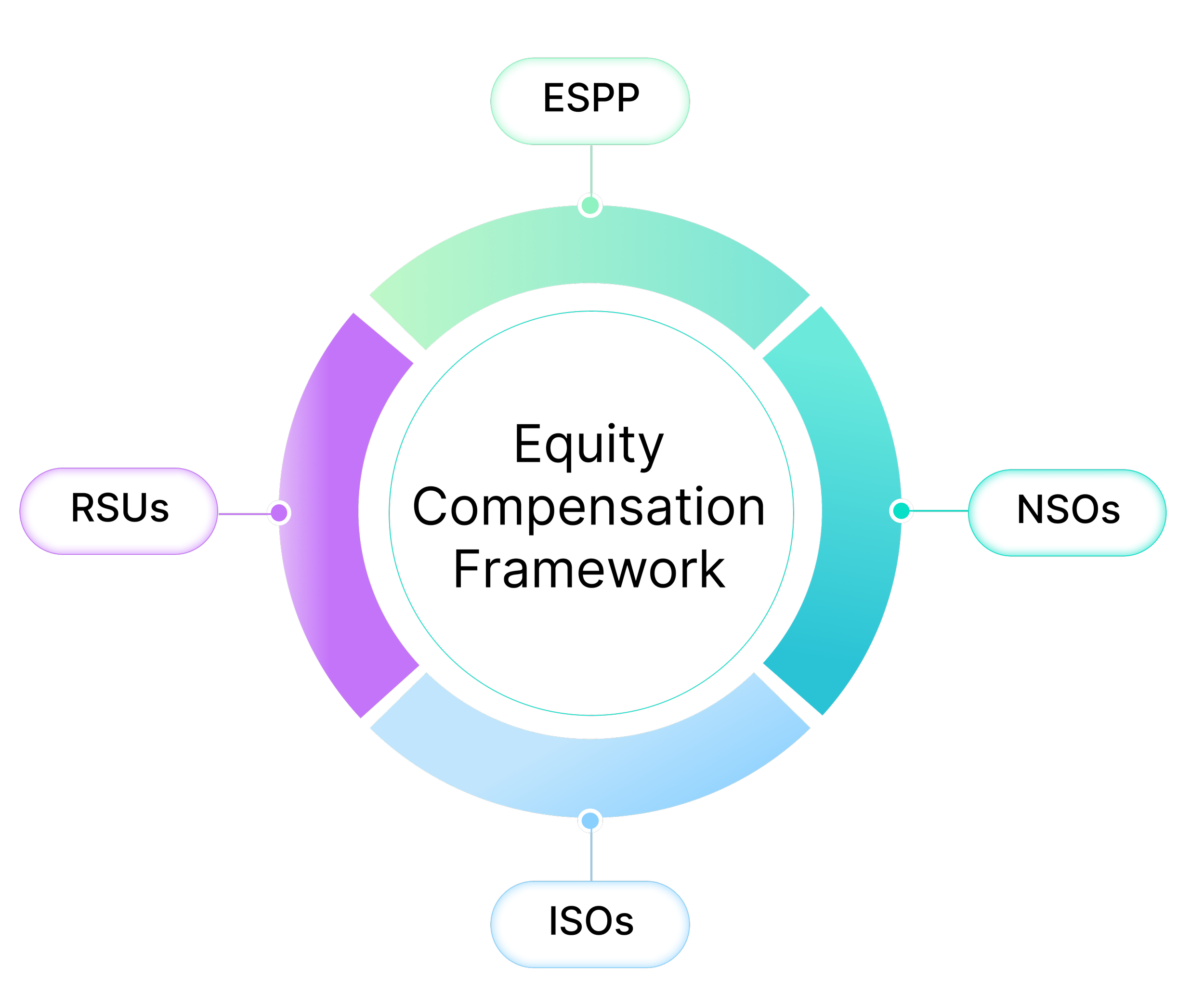
Equity compensation comes with real complexity. RSUs, ISOs, ESPPs, and NSOs each have their own tax treatment, and when you layer in multi-state income, foreign withholding, or large stock sales, even experienced preparers can miss things.
Some of these mistakes are subtle. Others are significant enough to swing a tax bill by tens of thousands of dollars. All of them are avoidable with the right expertise in your corner.
As a courtesy to all our clients, every tax season we provide a tax return review to help catch these mistakes and prevent unwelcome surprises on their tax bill.
Here are the most common tax mistakes we found in 2026, on 2025 Tax Returns.
ESPP Cost Basis Not Properly Adjusted
When ESPP shares are sold, the W-2 income portion needs to be adjusted off the cost basis to avoid double taxation. Even when a supplemental tax form from the employer is provided, preparers sometimes miss this adjustment, especially when the 1099 does not reflect it clearly but the supplemental form does. This mismatch is one of the more subtle errors we encounter, and it can result in significant overpayment.Foreign Tax Credit Missed on Equity Grants
Clients who pay taxes in both the US and a foreign country on the same equity grants may be entitled to a foreign tax credit. This often only appears on a shareworks or equity platform statement showing foreign withholding. When preparers do not have that document or do not know to ask for it, the credit goes unclaimed entirely.Long-Term Gains Misclassified as Short-Term
Capital gains classification has a major impact on tax rates, and errors here can be costly. We have seen large blocks of stock reported with the wrong holding period, flipping long-term gains into short-term, often due to a data entry or import error by the preparer. A $500K misclassification can translate into a $72K tax difference. This is one of the reasons a second set of eyes on your return matters.ISO vs. NSO Exercise Handled Incorrectly
Incentive Stock Options and Non-Qualified Stock Options are taxed very differently. ISOs may trigger AMT implications, while NSOs generate ordinary income at exercise. Mishandling the distinction leads to incorrect income classification and missed adjustments. Even preparers who claim experience with equity compensation can get this wrong, particularly when both types are exercised in the same year.Estimated Quarterly Tax Payments Not Reported
Clients who make quarterly estimated payments sometimes forget to share that information with their preparer, or the preparer fails to account for payments already made. The result is a return that shows a balance due on taxes that have already been paid. We also see this create underpayment penalties when the numbers do not line up correctly.Tax-Exempt Dividends and Interest Not Subtracted
Certain bond funds generate interest that is exempt from state income taxes. When preparers do not subtract this income at the state level, taxable income gets inflated. It is easy to overlook, but it is a straightforward correction once identified.NIIT Income Mislabeled
The Net Investment Income Tax applies to certain types of investment income above specific thresholds, but it depends on income being categorized correctly. When ordinary income is labeled as short-term capital gains, or vice versa, NIIT calculations can be off. This is a detail-level error that often slips through even careful reviews.
4 Success Stories from DiversiFi Tax Reviews
Numbers tell the story better than anything. Here are a few real examples from this year's reviews, showing what finding the right error at the right time can mean for a client.
1️⃣ ESPP and ISO Adjustment Missed: $15K saved
🤝 How we helped:
We identified both issues during review, worked with the client to gather the right documentation, and corrected the return for $15,000 in savings.
💬 What happened:
A client's return was missing the supplemental form needed to adjust the cost basis on their ESPP sale. Their ISO exercise also lacked the required AMT adjustment.
2️⃣ Long-Term Gain Entered as Short-Term: $30K saved
🤝 How we helped:
We caught the misclassification during our review and had it corrected, saving the client $30,000.
💬 What happened:
A $165,000 long-term capital gain was accidentally entered into the short-term category, a data entry error that significantly inflated the client's tax bill.
3️⃣ Foreign Tax Credit Unclaimed: $25K saved
🤝 How we helped:
We flagged the missing credit, helped locate the right documentation, and corrected the return for $25,000 in savings.
💬 What happened:
A client with equity grants vesting across two countries had taxes withheld in both. The foreign tax credit was missed entirely because it only appeared on a shareworks statement, not a standard tax form.
4️⃣ ISO vs. NSO Mishandling: $20K saved
🤝 How we helped:
Our review caught both errors. After corrections, the client saved $20,000, a reminder that equity expertise is not universal, even among professionals who claim it.
💬 What happened:
A preparer who had been referred as experienced with equity comp mishandled an ISO and NSO exercise in the same year, misclassifying income and missing the NIIT treatment distinction.
Final Thoughts
Tax returns that involve accounting for equity compensation are rarely straightforward. The more complex your financial picture, the more room there is for errors to quietly add up. If you have not had your return reviewed by someone who genuinely understands equity comp, it is worth asking what you might be leaving on the table.
A proactive tax strategy can help you avoid costly but common tax mistakes and make more informed decisions around your equity compensation.
Schedule a free consultation with one of our advisors to help with your tax strategy.
DISCLOSURES
DiversiFi Capital LLC is a registered investment adviser located in CA and may only transact business or render personalized investment advice in those states and international jurisdictions where we are registered, notice filed, or where we qualify for an exemption or exclusion from registration requirements. Any communications with prospective clients residing in jurisdictions where DiversiFi Capital LLC is not registered or licensed shall be limited so as not to trigger registration or licensing requirements.
Past performance is not indicative of future returns, and investing always carries inherent risks, including the potential loss of principal capital. Any investment strategies are specific to individual clients and may not be representative of the experiences of all clients.
The Information presented in our blog posts is intended for educational purposes only. It is not intended to make an offer or solicitation for the sale or purchase of any specific securities, investments, or investment strategies. Unless otherwise stated, the investments discussed in our blog posts are not guaranteed.
The content in our blog posts is designed to provide information and insights but should not be used as the sole basis for making financial decisions. The content provided in our blog post(s) is provided “as is,” and/or “as available.” Diversifi Capital LLC will to the best of its abilities maintain the content to be up to date. However, Diversifi Capital LLC does not represent or warrant that our content or our services found within are accurate, complete, reliable, current, or error-free.
We strongly encourage readers to conduct their own research, seek advice from qualified financial professionals, and consider their unique financial circumstances before making any investment or financial decisions. Your individual situation may vary, and it's essential to make informed choices that align with your specific goals and needs.
The information provided in this document does not, and is not intended to, constitute legal, tax, investment, or accounting advice; instead, all information, content, and materials available are for general informational or educational purposes only and it represents the personal view of the author. Please consult with your own legal, accounting or tax professionals.
Case studies presented are based on actual clients, however, some of the information may have been changed or altered. These studies are provided for educational purposes only. Similar or even positive results cannot be guaranteed. Each client has their own unique set of circumstances, so products and strategies may not be suitable for all people. Please consult with a qualified professional before implementing any strategy discussed herein.